


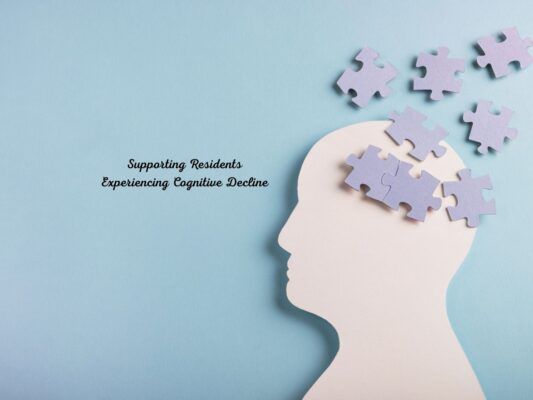
We receive frequent inquiries from property staff regarding residents experiencing cognitive decline, and as a former Occupancy Manager and Social Service Coordinator at an elderly property, it’s a topic in which our SVP of Client Engagements, Lauren Monaco, is particularly well-versed. She has personally helped guide residents and now trains property staff on issues related to supporting older adults who want to remain in their homes as they age.
Cognitive decline, whether it’s marked by mild forgetfulness or more serious conditions like dementia, can make everyday tasks very difficult. Routine tasks like paying rent on time, understanding leasing and/or maintenance notices, remembering to lock the front door, and even navigating the hallway safely can become a real challenge. These cognitive changes can lead to safety risks, isolation, or even unintentional lease violations — not because the residents don’t care, but because their abilities are changing.
Now, this is where property management has a unique and often underestimated role to play. We’re not healthcare providers, but we play a vital role in providing and maintaining the environments people call “home,” and small, thoughtful actions on our part can make a big difference.
While establishing emergency response plans and conducting inspections are extremely beneficial, simply taking a few extra moments to engage with your residents can build trust, respect, and safety. And beyond that, these practices not only support the individual, but also strengthen the entire community.
For example, ensuring good lighting in residential units, common areas, and entryways can prevent falls. Communicating clearly with easy-to-read notices and clear signage can make it easier for them to process information. Providing a calendar with social activities and holidays can help residents with memory challenges find camaraderie and stay on top of their responsibilities.
Beyond the physical space, property managers (or social service coordinators) can connect residents with local aging services, caregiver networks, or social programs.
Ultimately, managing affordable housing communities isn’t just good policy — it reflects our common goal to provide decent, safe, and sanitary housing to those who need it most. And helping those individuals remain in their homes as they age provides them with a sense of dignity and independence.
So as we think about our roles, whether you are a property manager, service coordinator, maintenance supervisor, or front desk attendant, remember: aging in place is not just about where someone lives — it’s about how they live. Through awareness, empathy, and thoughtful property management, we can help ensure that older adults not only stay in their homes, but continue to thrive in them.